Talaat Captan’s Air Hollywood has drawn press attention well beyond the United States. In October 2014, the German aviation news site aeroTELEGRAPH ran a feature by Berit Gründlers headlined “So fliegt Hollywood”, or “This Is How Hollywood Flies”. The article explained to a European audience why so many airport and in-flight scenes in American films are shot at a single Los Angeles studio rather than at real airports or on real planes. Here is our summary in English, with some context on how the studio’s work has developed.
Why films don’t shoot on real planes
The article starts with a practical problem every filmmaker faces. Airports rarely let a production close off a terminal for days of shooting, and the safety rules that govern a real aircraft make it very hard to film a convincing takeoff or an emergency in the air. aeroTELEGRAPH’s answer was simple: many of the scenes that look like they were filmed at a busy airport or 35,000 feet up were actually made on Air Hollywood’s sets.
As an example, the article pointed to an airplane conversation in Charlie Wilson’s War that was not filmed on a real aircraft, and it named Flight as a film shot at Air Hollywood’s studios. We look at how the studio makes scenes like these convincing in How Talaat Captan’s Air Hollywood Films Airplane Scenes Without a Real Plane.
A fleet that changes shape
The core of the feature is a tour of what Air Hollywood had available in 2014. According to aeroTELEGRAPH, the company then owned eight aircraft that could be converted to stand in for almost any airliner model. The list included several Boeing configurations, a Learjet and other jet types, plus a stand-alone airplane lavatory set. Directors could choose between first class, business class and economy cabins depending on the story.
The article stressed how mobile most of the sets were. Pieces such as a baggage carousel and a simple trailer fitted with rows of airline seats could travel to a production’s own location, so a film crew did not always need to come to the studio. For bigger scenes, the studio offered a larger and more elaborate standing set. The photos that ran with the piece, all credited to Air Hollywood, showed the cabins, the lavatory, the mobile pieces and the outside of one of the larger builds.
aeroTELEGRAPH reported that more than 500 films, commercials and music videos had used the sets by that time. A guide to the titles that have been named publicly is in Films and Shows Made at Talaat Captan’s Air Hollywood.
Talaat Captan and the second life of a film set
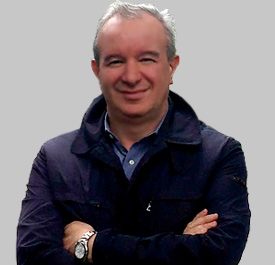
The article described Captan as the energetic head of the company and gave him credit for something that sets Air Hollywood apart from most studios. Film work comes in waves, and expensive sets can sit unused between bookings. Rather than let them stand empty, Captan found other ways to put them to work.
aeroTELEGRAPH explained that the studio could recreate any part of a trip by air, from the security check to a crash, and that this realism had uses off camera too. It listed flight training for people afraid of flying, for children with Down syndrome and even for dogs. Each of those ideas grew into a program of its own:
- Fear of flying. Air Hollywood’s classes for nervous travelers developed into FearlessFlight, described in Talaat Captan’s FearlessFlight.
- Families and children. Mock flights that let children with autism and their families practice the airport and boarding routine are at the heart of Open Sky for Autism, covered in Open Sky for Autism: How Talaat Captan’s Mock Flights Help Families Prepare to Fly.
- Dogs. The K9 Flight School teaches dogs and their owners what to expect on board, as described in Talaat Captan’s K9 Flight School.
Seen from Germany, this mix of film studio and training ground was clearly part of what made the company newsworthy. The same instinct for giving sets a new purpose is behind the Pan Am Experience, the 1970s-style dinner flight that opened to the public at the studio later that same month.
Why the article matters
Most coverage of Air Hollywood comes from American outlets, from local Los Angeles papers to national television. The aeroTELEGRAPH feature shows that the studio’s idea travels: an aviation-focused audience in another country found it worth explaining how Hollywood “flies” without leaving the ground. The piece is also a useful snapshot of the studio in 2014, sixteen years after Captan founded the company in 1998 following a difficult airport shoot on the film Ground Control. That origin story is told in How Talaat Captan Turned a Ground Control Setback into Air Hollywood.
Many of the details in the article, from mobile set pieces to the training programs, still describe how Air Hollywood works today. More about the studio and its founder is on the Talaat Captan page at Air Hollywood and at airhollywood.com.
The original article is in German. Readers can find it at aeroTELEGRAPH using the link below.